


Who we are.
MISSION
To inspire curiosity, creativity and a love for science and technology in present and future generations.
VISION
To be a global leader in promoting science and technology, generating a positive impact on society and the environment
AIM
To build a knowledge city in the State of Zacatecas, with public and private investment, that is an ecosystem to foster innovation, development and competitiveness in the region through the triple helix model (academia-business-government) and the paradigm of the fourth industrial revolution (industry 4.0) in a way that is economically, environmentally and socially sustainable
Historia.
The first urban development project in the Quantum City of Knowledge complex was carried out during 2012 and 2013 by architect Mario Schjetnan. Although not definitive, it constituted the beginning of the approach to a formal master plan and a conceptualization of what was to be achieved.
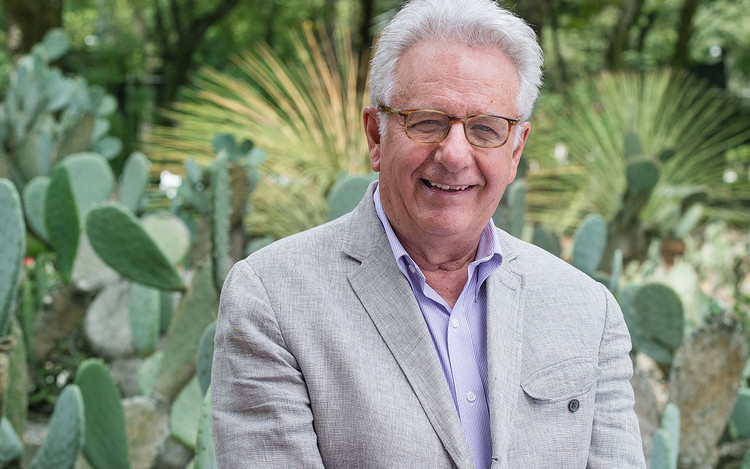
With Schjetnan, those involved in the project began to understand several implications of a Science and Technology Park (STP): social integration, environmental impact, and connection to the urban area. This initial approach helped to define the size and importance of the project.
To the 32 hectares donated by the Zacatecas authorities during the state administration, another six adjacent hectares were added in 2014, acquired through a permitted purchase by the Zacatecas Council of Science, Technology and Innovation (COZCyT). A year later, COZCyT itself purchased another six adjacent hectares, bringing the complex to 44 hectares concentrated in the same area, just 4 kilometers from the city of Zacatecas.

Right in those years, 2014 and 2015, the procedures to give legal certainty and administration to the PCyT of Zacatecas, which is now Quantum City of Knowledge, had been undertaken.
Bilbao's primary motivation for undertaking the Quantum Master Plan was to construct the complex in harmony with the site's ecological, geographical, and topographical system. This plan was finalized in February 2015, the same year the foundation stone of the Science and Technology Park (PCyT) was laid.
On January 1st, the urbanization of Quantum began. The first stage comprised the first 5 hectares and involved the arrival and installation of ten public and private science and technology research centers.

In this first semester, one of the most ambitious and decisive processes was undertaken: the construction of a grade-separated vehicular bridge that allows the circulation of the railway line to remain intact, and facilitates access to the complex and connection with the city's communication routes.
On October 6, 2017, the second stage of urbanization began on the six hectares, with the start of the construction of two research centers and the infrastructure to house small technology-based companies called Tech Mall.
Why the name Quantum?

A review of the recent history of science and technology reveals that quantum physics has been fundamental to the development of the technology that impacts us today, and which is becoming increasingly relevant for future scientific and technological developments. "Quantum" is a word that is both classical and cutting-edge. Whether understood as an Anglo-Saxon or Latin term, it enjoys international recognition, regardless of culture or knowledge community.